Woodland spirits, ancient gods and forgotten magical practices are one of my preferred research subjects. They are a portal into an ancient world, that let’s you explore the live, inspiration and imagination of people and societies long gone. And when you travel back into the present, you can find these traces influencing our current flow of time all around.
Prints and original sketches are available in my Ko-fi Shop!

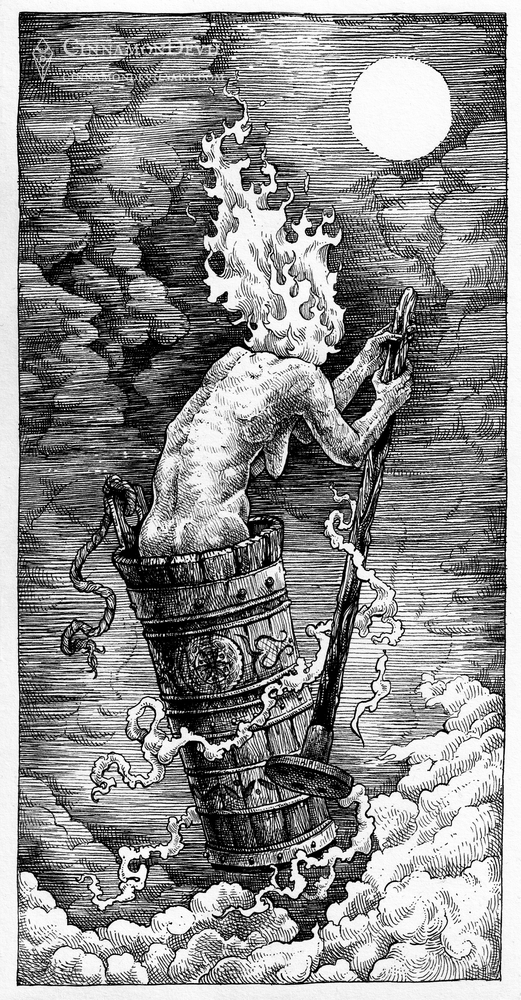
To the Witches’ Sabbath
Many mundane objects of history were associated with witches and especially with them riding through the air. The most common object is the broomstick. Other folkloric interpretations describe mortar and pestle as well as the butter churn as a valid vehicle.
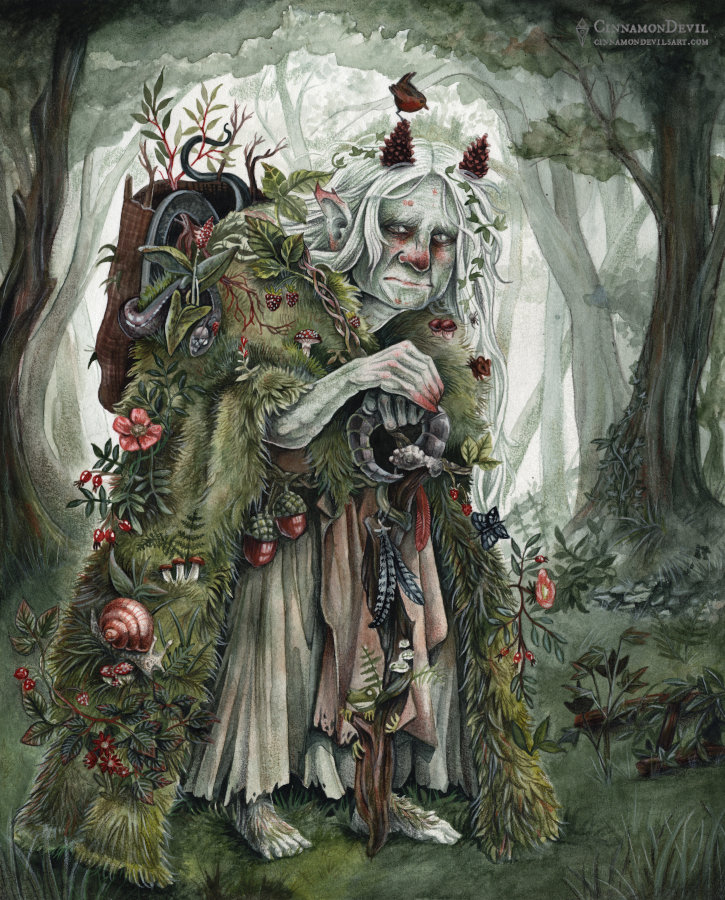
Lady of the Woods
The Buschweibchen, roughly translated to Lady of the Woods, is a mythical creature in middle European Folklore. She is considered the Queen of the forest and mother to all woodland spirits. She appears as an old gammer with long white hair, wrinkles all over her face and moss on her feet. She is good willed, helps lost wanderers and if you help her carry her goods, she treats you with yellow leaves, which will turn into gold. The Buschweibchen is often associated with Frau Holle, an ancient Germanic goddess.
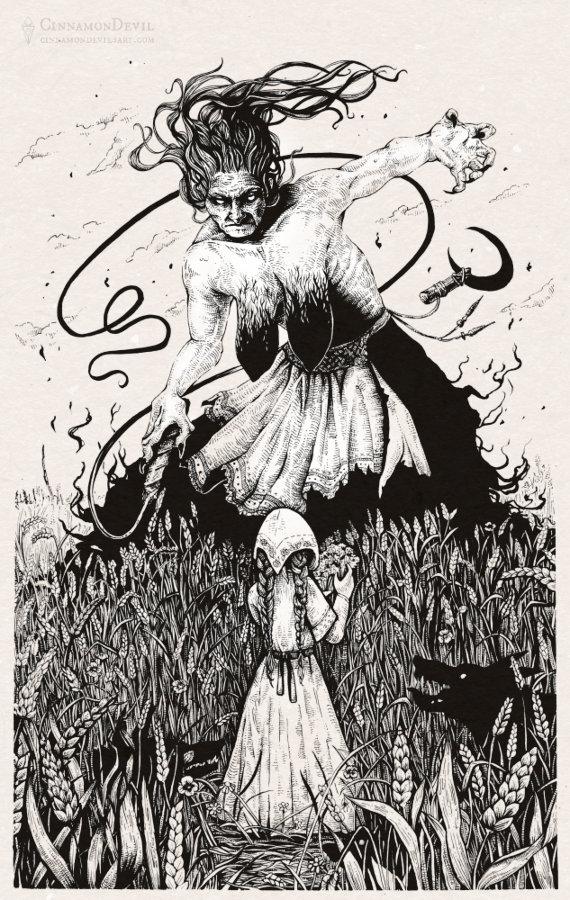
Aunt Wheat
The Roggenmuhme (Aunt Rye) or in this case the Weizenmuhme (Aunt Wheat) is a central European field and weather spirit, who most often protects the crops from trampling passengers or children walking through the field to pick flowers. But she can also plague the fields in the form of storms, drought or pests. A pack of black wolves follow her every step. The spirit appears as an old hag, with saggy, long breasts, which are filled with blood or tar. She might use them to punch her victims or feed them with poisoned milk.
The Muhme also appears as Lady Midday, taking the lives of those who are working in the fields at high noon.
Creepy Huts
Original work (2024). Main inspiration for these designs is the slavic folk tale of Baba Yaga. The witch lives in a mysterious hut, standing and walking on one or two chicken legs. The chicken hut on the left also takes inspiration from an old German saying: “Jemanden den roten Hahn auf’s Dach setzen” (roughly: to set the red rooster on someone’s roof), which is a metaphor to set a house on fire. In Germany there is a an old saying about the red rooster on the roof – a metaphor for a flames consuming a house. A fire at night may occasionally resemble the fluffed plumage of a rooster. In some folk beliefs the rooster was associated with light, weather and fire spirits due to his early rising nature and brightly colored feathers. Today, the red rooster is still used as a guild emblem by some fire brigades.

Midsummer Magick
Midsummer marks the longest day with the shortest night within a year. In locations close to the poles, the sun shines through out the whole night time, which is called Midnight Sun. Especially in the northern hemisphere, festivities around midsummer are widespread.
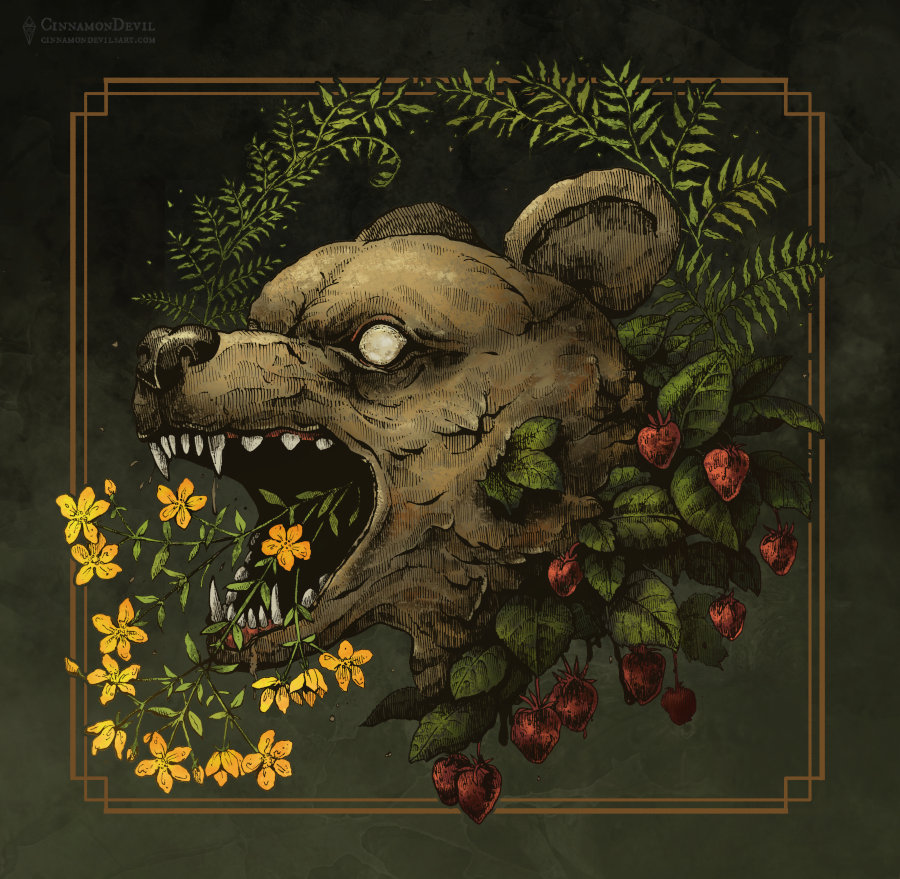
A plant associated with midsummer is St. John’s Worth. It’s yellow petals represent the sun and it contains photosensitive substances. Another plant is fern. It is said, that the magical properties of the mysterious fern seed are most noticeable around the midsummer days and are able to make one invisible or find hidden treasures. Many festivity dishes also contain strawberries, because they are quite abundant around this time.
Bears enjoy this abundant time, too. They wander large distances to find mates.